
SEO Lead Generation: Why It’s Not Turning Traffic Into Enquiries (And How to Fix It)
How Does SEO Lead Generation Turn Traffic Into Qualified Leads?
SEO lead generation used to be judged by one metric: traffic. For years, SEO success was measured by getting more clicks, more impressions and more keywords ranking.
But here’s the uncomfortable truth most agencies won’t say out loud:
Traffic without intent capture is just expensive noise.
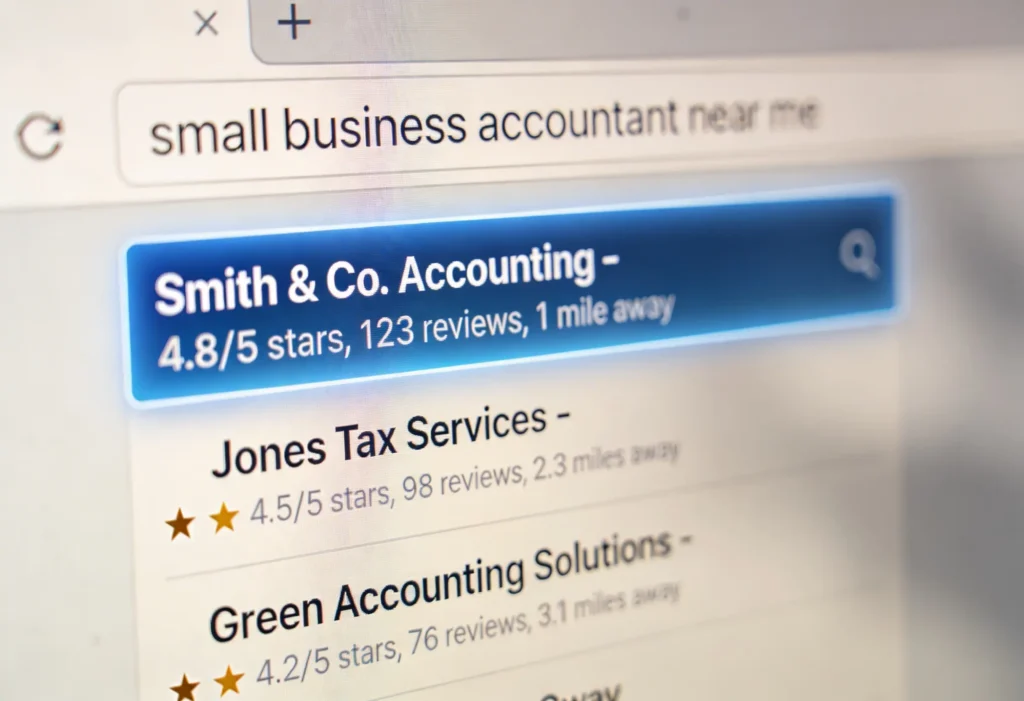
In 2026, search behaviour has changed. AI Overviews answer questions instantly. Copilots summarise options. Perplexity compares providers before a user even clicks through. By the time someone visits your website, they are already filtered, informed, and closer to a decision.
If your SEO lead generation strategy is still built around publishing blog posts and hoping for enquiries, you’re behind.
What you need now isn’t more traffic.
You need a system that turns high-intent search into qualified leads.
The Real Problem With Most SEO Lead Generation Strategies
Many SMEs share the same experience:
“We ranked on page one.”
“Traffic increased.”
“But enquiries stayed flat.”
That disconnect happens because traditional SEO lead gen focuses on exposure rather than progression.
It assumes visibility equals action.
But visibility only creates opportunity. It does not create movement.
Traditional SEO lead generation often prioritises:
- Content volume
- Backlinks
- Technical improvements
- Keyword expansion
All useful. None decisive on their own.
Because none of these guarantee that a visitor:
- Understands what to do next
- Feels confident enough to enquire
- Sees themselves reflected in your solution
Without a defined pathway, SEO lead generation becomes a publishing routine rather than a growth system.
Why Traditional SEO Lead Gen Focuses on Traffic, Not Outcomes
Historically, traffic was measurable and easy to report.
Rankings could be shown in graphs.
Sessions could be highlighted in green.
Enquiries, however, require integration, tracking, and attribution discipline.
So agencies optimised for what was easiest to measure.
In today’s search environment, that shortcut no longer works.
Those who click are not browsing casually. They are evaluating.
That means your SEO lead generation must do more than inform. It must guide.
A stronger question than “How do we rank?” is:
What decision is the searcher trying to make?
When SEO lead generation is built around decision points, conversion becomes a structural outcome rather than a hopeful one.
What High-Intent SEO Lead Generation Actually Looks Like
Consider searches such as:
- “Bookkeeping services pricing calculator”
- “Do I need a family lawyer quiz”
- “Personal injury claim value estimator”
- “How much does X cost in the UK?”
These are not awareness queries. They are evaluation queries.

Instead of responding with long-form content alone, effective SEO lead generation introduces structured interaction, such as:
- Pricing calculator that frames budget expectations
- A qualification assessment that clarifies fit
- Personalised estimate based on real inputs
- Decision tool that compares realistic options
Now the visitor is not consuming content. They are participating and participation increases:
- Time on page
- Engagement depth
- Perceived value
- Trust
And more importantly, it generates structured data that improves follow-up quality. That is the difference between passive traffic and active lead generation.
Why PDFs Alone Don’t Strengthen SEO Lead Generation
The classic downloadable guide model still has its place. But in many industries, it now feels predictable.
A PDF:
- Requires effort before value
- Often delivers generic advice
- Rarely qualifies the lead
- Creates minimal interaction
Interactive assets, by contrast:
- Provide immediate utility
- Reflect the user’s unique situation
- Signal expertise through application, not theory
Improve the effectiveness of SEO lead generation by making the value exchange reciprocal. When someone receives tailored insight before being asked for a call, trust compounds.
And trust converts.
Decision-Driven SEO Lead Generation
At Prosperitiv, we approach SEO lead generation through a decision-first lens.
Not traffic-first. Not content-first.
Decision-first.
Here is how that translates into execution.
1. Identify Decision-Stage Keywords
We analyse more than volume. We look for behavioural signals in search terms.
Indicators include:
- “Cost”
- “Worth”
- “Do I need”
- “Calculator”
- “Comparison”
- “Estimate”
These phrases reveal readiness. They signal someone is weighing action. SEO lead generation built around these terms captures momentum, not curiosity.
2. Build a Practical Decision Tool
A decision tool is not gimmicky. It is functional and it answers the question the visitor is already asking.
Some examples include:
- Budget forecasting tools
- Eligibility checkers
- Risk scoring assessments
- Personalised service estimators
When built within a structured funnel environment, these tools:
- Deliver value immediately
- Capture relevant qualification data
- Improve lead scoring
- Reduce wasted sales calls
This is where lead generation becomes measurable at a commercial level.
Capturing intent is only part of the equation. How that data is handled and stored responsibly matters just as much, especially in professional services where trust and compliance are non-negotiable. We explore this further in our guide on why customer data protection is a leadership responsibility, not just an IT issue.
3. Structure the Funnel With Intention
Sequence determines outcome.
Visitor arrives.
Engages.
Receives clarity.
Understands next steps.
At this point, an enquiry feels logical, not pressured.
This structure:
- Increases conversion rate
- Improves lead quality
- Shortens sales cycles
- Reduces friction
Strong SEO lead generation respects timing.
4. Layer SEO and Authority for Scale
Once the core system exists, amplification becomes strategic.
We reinforce it with:
- Supporting content clusters
- Clear internal linking
- Structured data where relevant
- Authority signals from reviews and PR
- AI-readable formatting
This creates resilience. The asset ranks, converts, and compounds.
SEO lead generation becomes infrastructure, not campaign activity.
Why SEO Lead Generation Must Adapt in the AI Search Era
AI systems reward clarity and usefulness.
They prioritise:
- Structured explanations
- Defined pathways
- Practical application
- Consistency of expertise
Interactive decision assets align naturally with these priorities. They are easier to interpret, easier to summarise, and easier to reference.
This strengthens:
- AI visibility
- Brand authority
- Search performance
The result is a feedback loop where engagement strengthens visibility, and visibility strengthens engagement. We’ve also explored in more detail how Google’s AI mode is reshaping search behaviour, where visibility is no longer just about ranking but also interpretability.
Are You Measuring the Right SEO Lead Generation Metrics?
Traffic is visibility.
Enquiries are progression.
Revenue is validation.
Effective SEO lead gen measures:
- Conversion rate by page
- Lead qualification depth
- Funnel progression stages
- Pipeline contribution
- Revenue influenced by organic search
If reporting stops at sessions, the strategy is incomplete.
Who This Model Suits Best
Any business where decisions carry weight benefits from structured guidance. That said, decision-driven SEO lead generation works particularly well in industries where buyers evaluate carefully before making contact.
This includes:
- Personal injury and family law firms handling high-stakes cases
- Accountants and bookkeeping firms where pricing transparency matters
- Financial advisers and mortgage brokers dealing with risk and regulation
- B2B consultancies with longer sales cycles
- Automotive service centres offering MOTs, tyres and vehicle repairs
- Engineering and manufacturing subcontractors managing technically complex projects
- Specialist trades with variable scope and pricing
- SaaS businesses with feature comparison and qualification needs
- Private healthcare providers where reassurance and clarity are essential
What these industries share is simple:
The buyer is not browsing casually. They are comparing costs, evaluating risk, assessing fit and deciding whether to move forward.
Traditional SEO attracts them. Structured SEO guides them. If someone in one of these industries reads this list, they should immediately recognise themselves. That’s intentional.
We’ve seen this model work particularly well in automotive service businesses and precision engineering subcontractors. Here is where high-intent search often precedes direct enquiries, especially in areas such as "MOT bookings near me" or "precision waterjet cutting services".
Visibility Simply Isn’t Enough.
The businesses that win in modern search won’t be the loudest. They’ll be the clearest, the most useful and the easiest to understand by humans and machines. If your SEO lead gen produces visits but not conversations, the structure needs refinement.
We help businesses:
- Identify high-intent opportunities
- Design practical decision tools
- Build structured funnels
- Optimise for search and AI visibility
- Convert traffic into qualified enquiries
No inflated reporting.
No vague metrics.
No traffic theatre.
That’s what effective SEO lead generation looks like now.
FAQS:
Click the + to read any answer.
Yes, particularly for businesses where buyers research carefully before making contact.
Professional services, engineering subcontractors, legal firms, healthcare providers and specialist trades all benefit from structured decision pathways. When search intent is captured properly, enquiries often follow naturally.
Organic visibility takes time.
Building authority, ranking for competitive decision-stage keywords and earning trust with both users and AI systems does not happen overnight.
However, when targeting high-intent search terms, conversion impact can often appear sooner than broad traffic campaigns. That’s because the audience is already closer to action.
It’s also important to understand the difference between paid and organic visibility. When you stop running paid ads, your visibility often disappears immediately. If you haven’t built strong organic foundations, your presence in search can drop just as quickly.
SEO lead generation builds long-term positioning. Paid ads accelerate reach. The strongest strategies use both, but organic infrastructure ensures you are not entirely dependent on paid spend.
The timeline ultimately depends on competition, existing authority and execution quality.
Traditional SEO focuses on rankings and traffic.
SEO lead generation focuses on:
- Commercial intent
- Conversion pathways
- Qualification data
- Funnel progression
- Revenue contribution
The difference is not just visibility, but measurable outcomes.
This usually means your content is attracting curiosity, not decision-stage intent.
Ranking for informational keywords can bring volume, but if visitors are not ready to take action, conversion rates remain low. Structured SEO lead generation focuses on commercial signals such as cost, comparison, eligibility and booking intent, rather than generic traffic metrics.
Recent Posts





Popular Posts
About us and this blog
We are a digital marketing company with a focus on helping our customers achieve great results across several key areas.
Request a free quote
We offer professional SEO services that help websites increase their organic search score drastically in order to compete for the highest rankings even when it comes to highly competitive keywords.
Subscribe to our newsletter!
More from our blog
See all posts